Burying a pet after euthanasia: an overlooked and underestimated risk
By Céline Leheurteux, veterinarian
When we think about poisoning in pets, we usually think of plants, chocolate, grapes or household products. But I want to talk about a gesture deeply rooted in our culture that puts both domestic and wild animals at risk, as well as water and soil: burying a pet that has been euthanized in the backyard.
A meaningful gesture that requires preparation
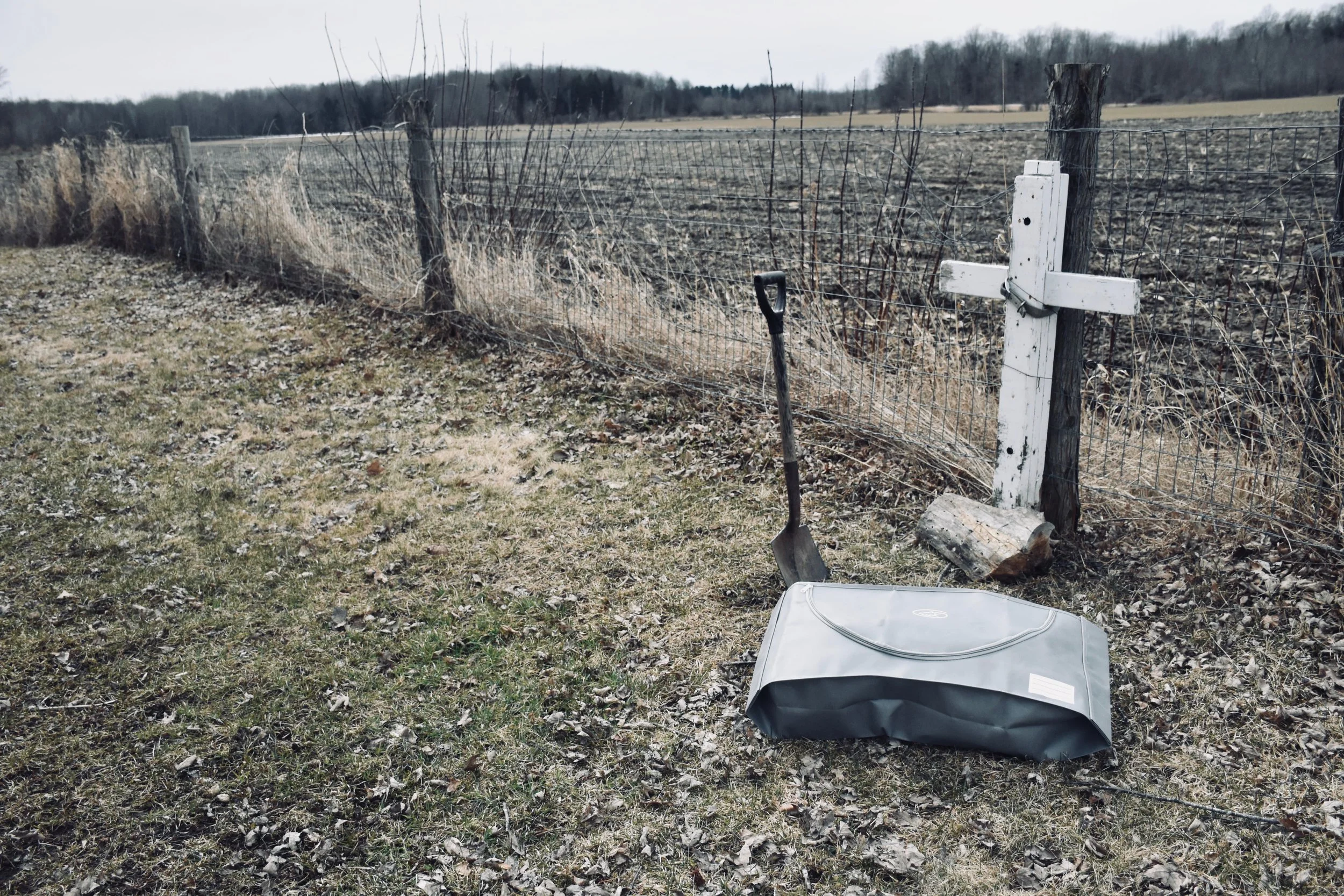
Burying a companion under a tree in the garden, placing a drawing in the grave, planting flowers: for many families, this is a way to say goodbye and to keep a place of remembrance. I am on a mission to help families do it with full knowledge of the risks for animals and the environment.
Because reality is far from what we see in movies. You have to deal with roots, stones, clay and thedepth to be reached. And above all with a risk that very few families are aware of the toxicity of the body itself when the animal has been euthanized.
Pentobarbital: a drug that doesn't leave with the animal
To euthanize an animal, veterinarians most often use an anesthetic, pentobarbital, at a high dose. After death, the drug remains in the tissues. Depending on the animal's weight, the amount containedin the body can be significant.
An animal that eats part of these tissues therefore absorbs pentobarbital in turn. Depending on the dose, it may fall more or less deeply asleep, slip into a coma, or even die.
Environmentally safe protocols do exist, but they are rarely used because they are less predictable than pentobarbital, which ensures a gentle passing.
A toxicity that lasts for years
This is the least known point: pentobarbital is very stable. It persists for at least four months in soil [1] and can remain present for decades in nearby waterways [2]. It does not break down quickly or completely in a buried body.
At a clinic where I practiced in Quebec, two farm dogs dug up a horse that had been euthanized three years earlier. They lost consciousness for an entire day. The veterinary literature reports a similar case: two dogs poisoned by the remains of a horse buried two years earlier, one of which died before reaching the clinic [3].
Every year, more animals than we think arrive unconscious at the emergency room. I think in particular of a litter of buried puppies that their mother dug up and ate, or of a cat that had dug up the neighbor's dog. These situations are exceptional, but they are very real, and it is our duty to prevent them.
The drug can also migrate through the soil and reach water: groundwater, wells, nearby streams. Traces of pentobarbital were found in a stream 300 m (about 1,000 ft) from a burial site, 21 years after the animals were buried there [2].
The victims: the living animals nearby
The danger does not concern the deceased animal, but those living nearby:
Pets: your own dog, the neighbor's dog, a cat. Dogs dig, without any ill intent or unusual circumstances.
Wildlife: foxes and other scavengers attracted by a grave that is too shallow or dug in soil that is too loose.
If you think your pet has eaten remains
Unusual drowsiness, staggering gait, difficulty staying awake, slowed breathing: contact your veterinarian immediately. The prognosis depends directly on how quickly your pet receives care.
Burying your pet while limiting the risks
First of all, regulations vary widely from one country and municipality to another. Home burial is most often prohibited in urban areas.
Rules change regularly. Find burial guidelines on our website.
If you are allowed to go ahead:
Permission: if you do not own the property, get the owner's consent.
Contagious diseases: an animal that died of a contagious disease must be cremated, not buried.
Depth: make sure the top of the body is covered with at least 2 feet (60 cm) of earth. If this depth is not attainable, cover the grave with a large rock or wire mesh to prevent wildlife from digging.
Soil type: avoid sandy soil, black earth, shallow bedrock, flood-prone areas and areas close to a building foundation.
No contact with water: the body must never touch a lake, river, pond or drainage area.
The body bag: the EUTHABAG body bag is intentionally non-biodegradable. It retains fluids, limits the spread of pentobarbital and reduces the risk of an animal reaching the body. Its fabric also allows the family to write loving words on it, a ritual that helps begin the grieving process. If you move, it makes handling the remains easier.
Preparing the grave: a layer of lime at the bottom and over the body helps limit odors and deter animals. Pack and level the soil.
Selling the property: always disclose the location of the grave to buyers. An undisclosed grave could be considered a hidden defect.
Other options exist
Consider burying the ashes instead of your pet’s body. Pet cemetery, communal or private cremation, with or without the return of ashes, aquamation*: talk to your veterinarian or to pet aftercare
providers. Preparing this step carefully can turn a difficult moment into a dignified tribute, and leave you with the feeling of having done right by your companion after everything you shared.
* Aquamation is currently available mainly in North America.
“Until one has loved an animal, a part of one’s soul remains unawakened.”
Anatole France
SOURCES
Bagsby et al., 2018. Stability of pentobarbital in soil. Journal of Environmental Science and Health, 53, 207-213.
Eckel, Ross, Isensee. Ground Water, 1993, 31(5): 801-804.
. Kaiser et al., 2010. Poisoning of two dogs by a horse carcass buried two years earlier.
Disclaimer: home burial regulations for pets vary by country, state or province, and between rural and urban areas. This article aims to inform readers about the hazards of home burial. The author takes no responsibility for the guidelines listed and recommends cremation or aquamation whenever possible.